
ODE TO ‘91
The NBA Playoffs That Ended One Era and Started Another: A Six-Part Series from Everything Basketball

In the spring of 1991, three dynasties were dying at the same time.
Boston’s Big Three, Larry Bird, Robert Parish, Kevin McHale, were held together by medical tape and stubbornness and the memory of what they’d been. Detroit’s Bad Boys, back-to-back champions who had bent the league to their will through sheer physical intimidation, could feel the ground shifting beneath them. And in Los Angeles, Magic Johnson was running Showtime one last time, though nobody knew yet just how final that word would be.
Meanwhile, in Chicago, a team that had spent six years learning how to lose was finally ready to stop.
All of it, the endings, the beginning, the last stands and the first breaths of something new, happened in one playoff run, across one spring, on the same floors, under the same lights. And then it was gone.
Ode to ‘91 is a six-part series that revisits the 1991 NBA Playoffs not as the prelude to Jordan’s dynasty, that story has been told, but as the last time an entire generation of basketball royalty shared the stage. The last time all of it existed simultaneously. Before the retirements. Before the diagnosis. Before the league remade itself in Chicago’s image. For one postseason, the old world and the new world were playing at the same time, and if you knew what you were watching, you could see the torch being carried from hand to hand, city to city, era to era, in real time.
I turned 13 years old in the spring of 1991, watching from my childhood living room in New York, and I didn’t fully understand what I was seeing. I knew I loved the Celtics. I knew Bird was hurt. I knew Jordan was different from everyone else on the court in a way I couldn’t articulate but could absolutely feel. What I didn’t know, what none of us knew, was that we were watching the last chapter of one story and the first chapter of another being written at the exact same time.
Thirty-five years later, I understand it now. And that’s what this series is about.
The Six Series
I didn’t choose these six matchups because they were the most famous. I chose them because together, they tell a complete story, a story about how power transfers in professional basketball, how dynasties end not with a single loss but with a slow, proud, painful unwinding, and how the team that inherits the throne has to earn it by walking through every ghost that came before.
Here’s what’s coming, one installment per week, for the next six weeks.
Week 1 - Celtics vs. Pacers: The Last Stand at the Garden
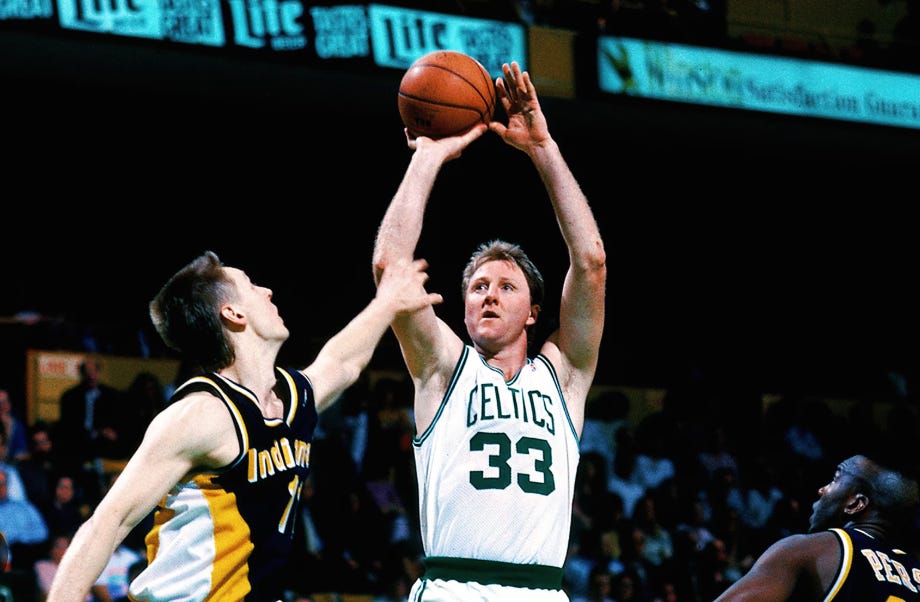
The Celtics started the 1990–91 season 26–5. By the time the playoffs arrived, Bird’s back had betrayed him again, and Boston limped into the postseason as a two-seed that didn’t feel like one. Indiana’s seventh-seeded Pacers came into the Garden with Chuck Person talking trash and Reggie Miller still a few years from becoming Reggie Miller. What followed was five games of genuine hostility, and a Game 5 moment when Bird went down on the parquet with a concussion and a fractured cheekbone, the Garden went silent, and then he came back. Because of course he did. It was borrowed time, and everyone in the building knew it. But borrowed time, in Boston, has always been enough to fill the rafters.
Week 2 - Warriors vs. Spurs: Small Ball Before the World Knew the Word
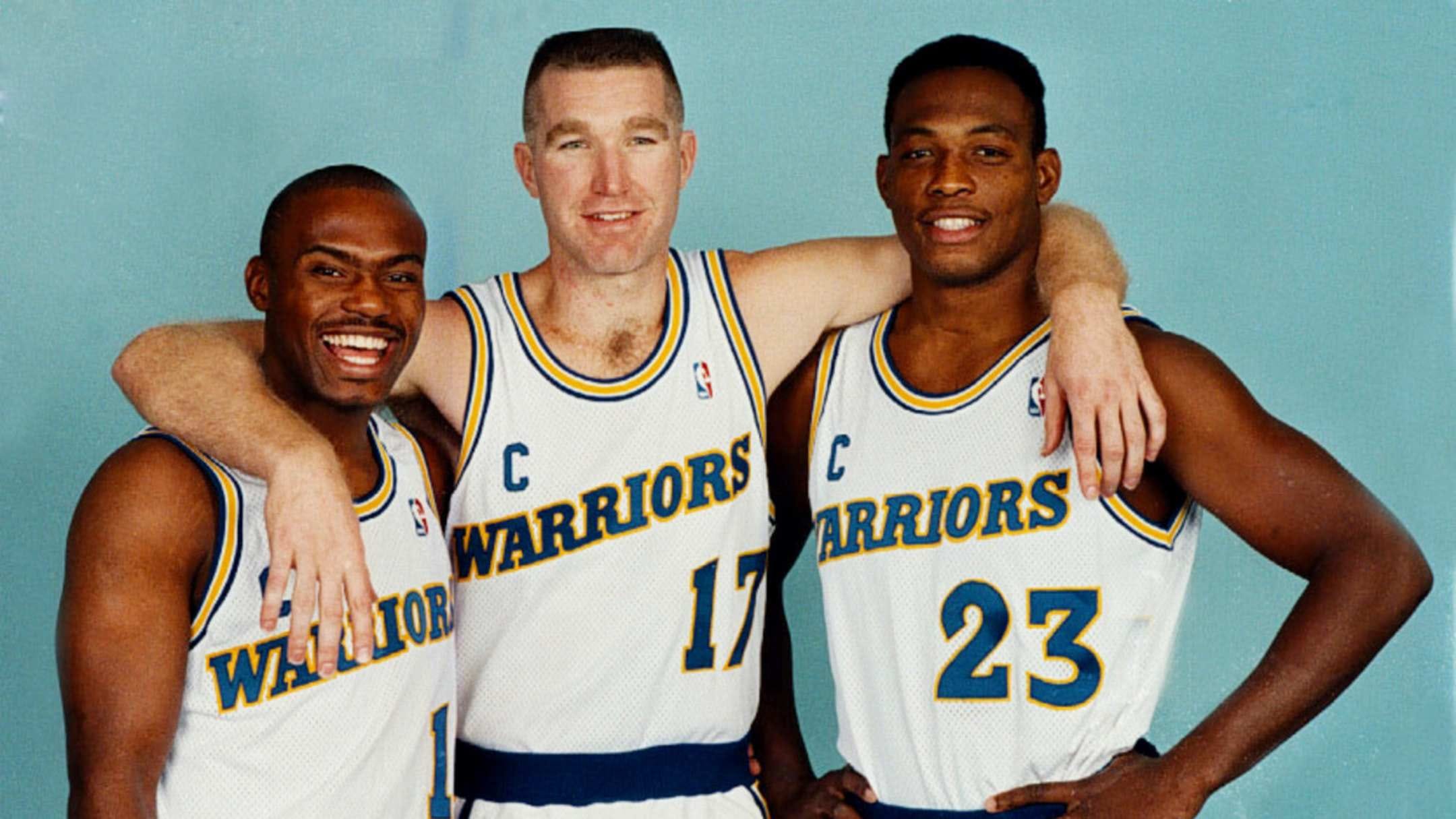
David Robinson and the 55-win Spurs were the second seed in the West. Convention said they’d handle a seventh-seeded Golden State team without much trouble. Don Nelson hadn’t read the convention. Run TMC, Tim Hardaway, Mitch Richmond, Chris Mullin, plus Šarūnas Marčiulionis off the bench, played a style of basketball the league didn’t have a name for yet. Four out, five out, spread the floor, push the pace, make the game so fast and so wide that a dominant center becomes a geometric problem his own roster can’t solve. The Warriors took the series in four. Sixteen years before anyone called it small ball, Nelson had already drawn up the future on a whiteboard in Oakland.
Week 3 - Celtics vs. Pistons: The Last Battle
Five playoff meetings since 1985. The Bird steal. The DJ layup. Robert Parish’s fist finding Bill Laimbeer’s jaw. The Silverdome shaking. The Garden shaking back. This wasn’t a rivalry. This was a near decade-long war, and the 1991 Eastern Conference Semifinals was the final battle. Both teams were wounded. Both knew that whoever survived would face Jordan’s Bulls next, with a finals trip on the line. But pride doesn’t do math. Down 3-2 in the series, the Celtics mounted a 17-point comeback on the road in Game 6, took the lead with two minutes to play, and then watched an offensive goaltending call on Kevin McHale, a call the tape does not support, wave off a go-ahead basket and send the game to overtime. Detroit won. There was no Game 7 at the Garden. Two civilizations met for the last time in Auburn Hills that night, and history turned on a whistle that should never have been blown.
Week 4 - Lakers vs. Blazers: Showtime’s Last Stand
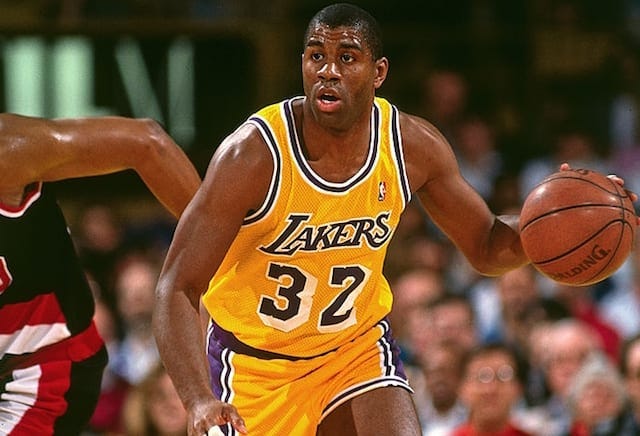
Portland won 63 games. They were the defending western conference champions. They had Clyde Drexler, Terry Porter, Buck Williams, Duckworth, Kersey, Cliff Robinson, and Ainge. They were deep, balanced, and battle-tested. The Lakers had Magic Johnson and the last embers of Showtime, and that turned out to be enough. LA took the series in six, Magic brilliant throughout, the Western Conference running through Los Angeles for one more spring. What nobody knew, what Magic himself didn’t know, was that this was his final run at an NBA title. His last great statement as the defining co-star of his generation. November was coming, and with it, an announcement that would change everything. But in May of 1991, Showtime had one more curtain call left.
Week 5 - Bulls vs. Pistons: Taking What’s Theirs
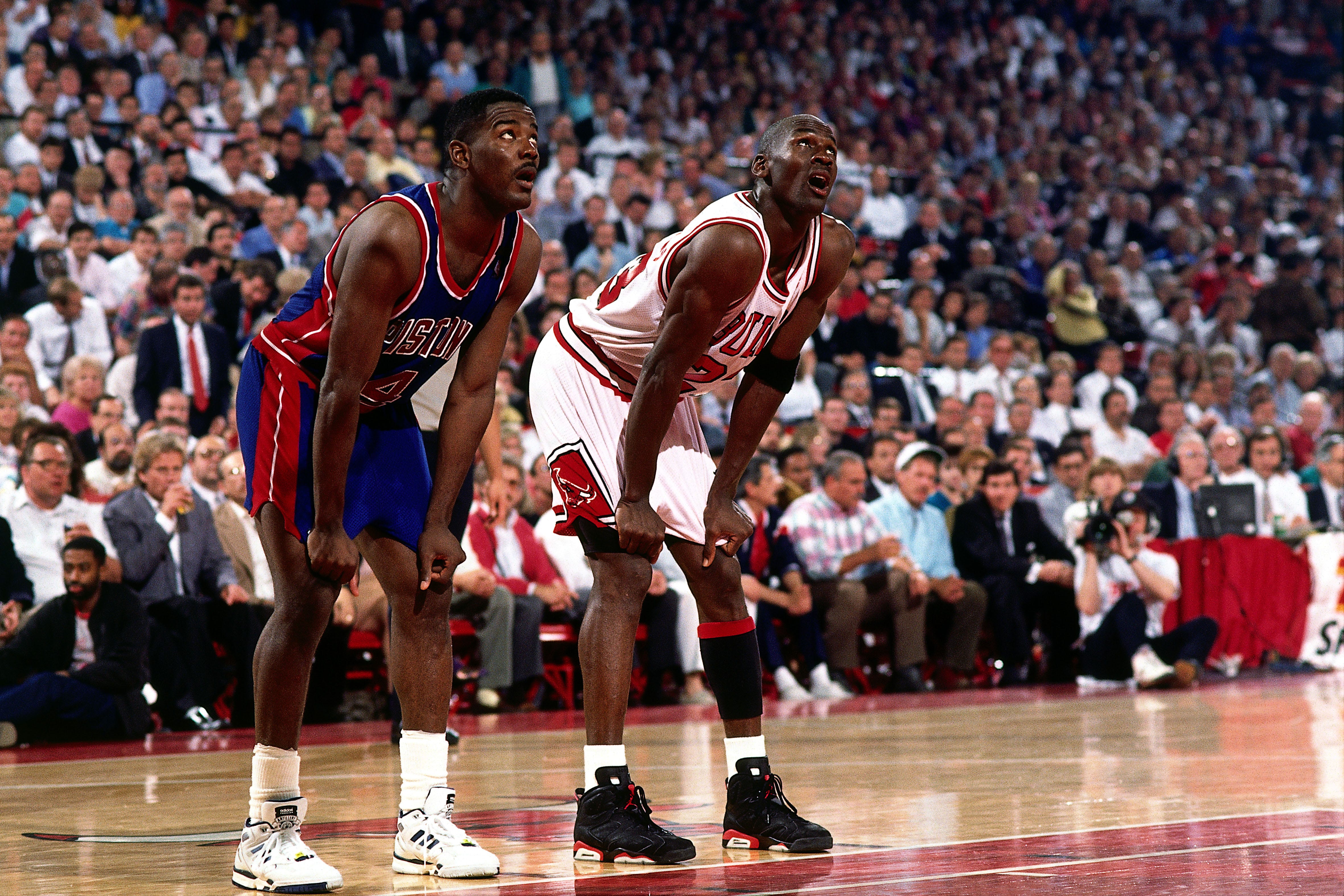
Three straight years. Three straight playoff meetings. Three times the Pistons sent Jordan and the Bulls home. The Jordan Rules weren’t a scouting report, they were a statement, delivered with elbows and hard fouls and the collective will of a team that had decided Michael Jordan would not beat them, regardless of the cost. But 1991 was year four. Phil Jackson’s triangle offense had turned Chicago from a one-man show into a system.Scottie Pippen, haunted by the migraine game the year prior, arrived with something to prove. The sweep was total. Four games. No answers. And before the final buzzer of Game 4, Isiah Thomas led his teammates off the floor and into the tunnel without shaking hands. The Bad Boys walking away. The Bulls celebrating behind them. A moment that would echo through the sport, and quietly, through the selection process for the 1992 Dream Team, where one of the greatest point guards who ever lived would be conspicuously absent.
Week 6 - Bulls vs. Lakers: The Torch Is Passed
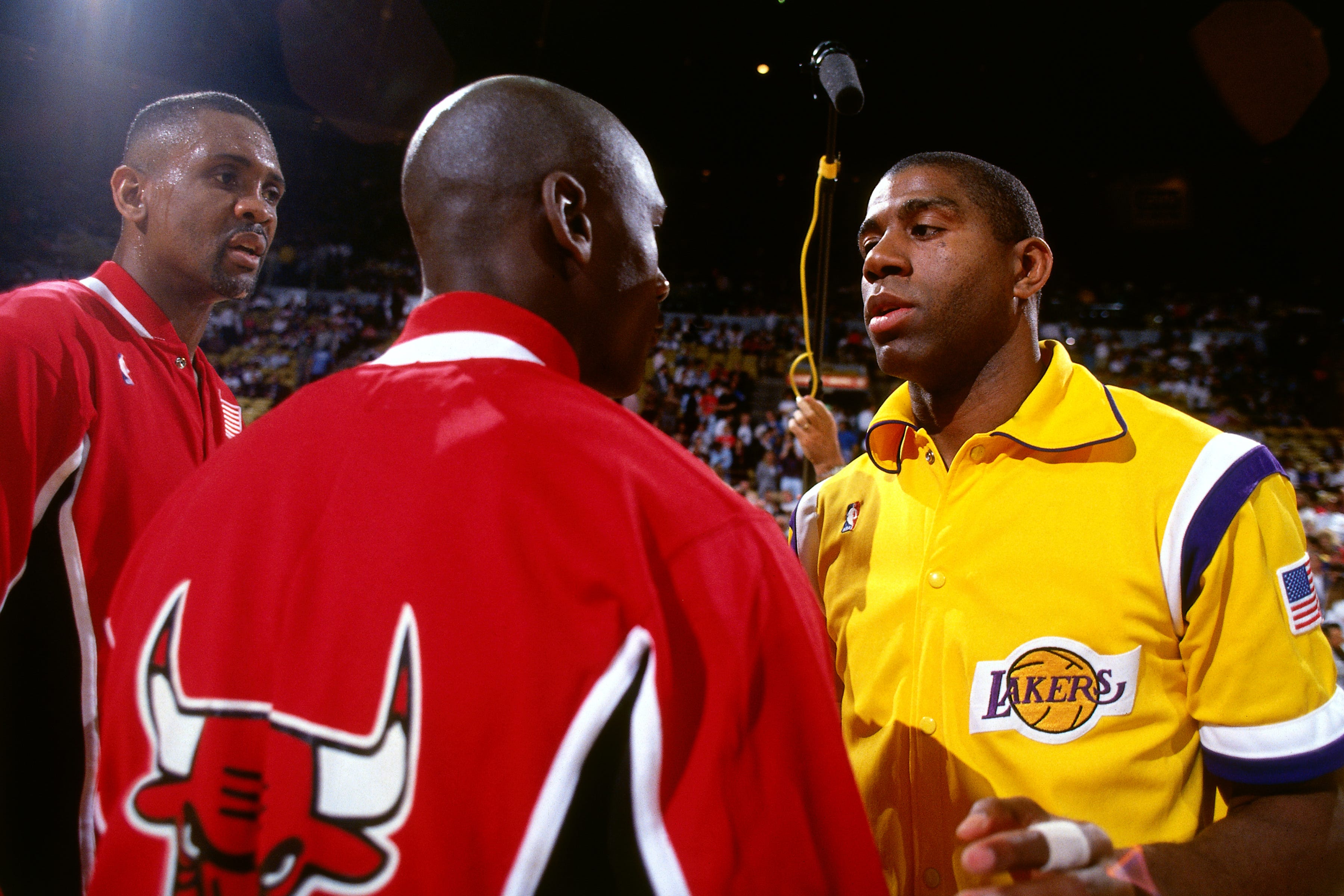
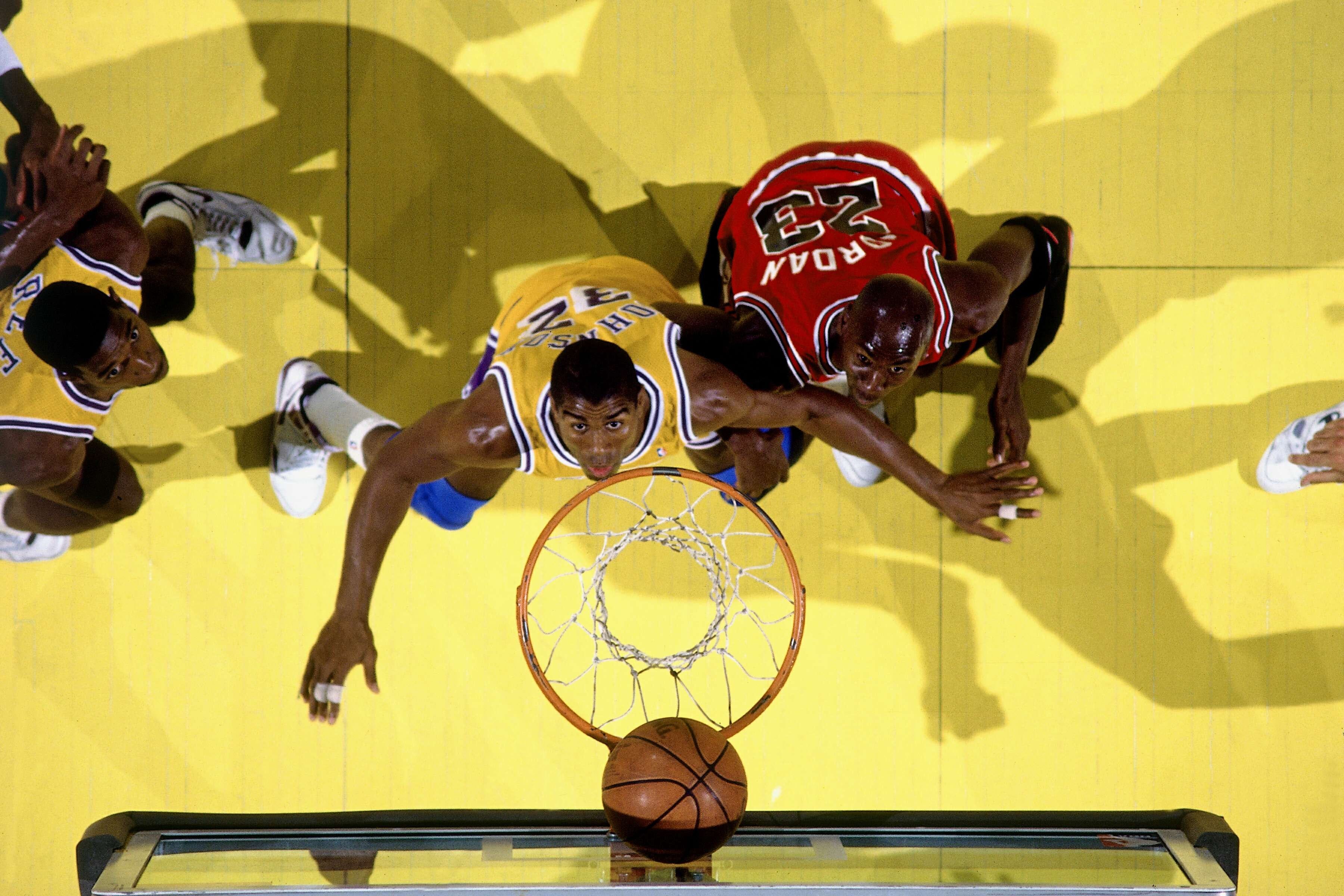
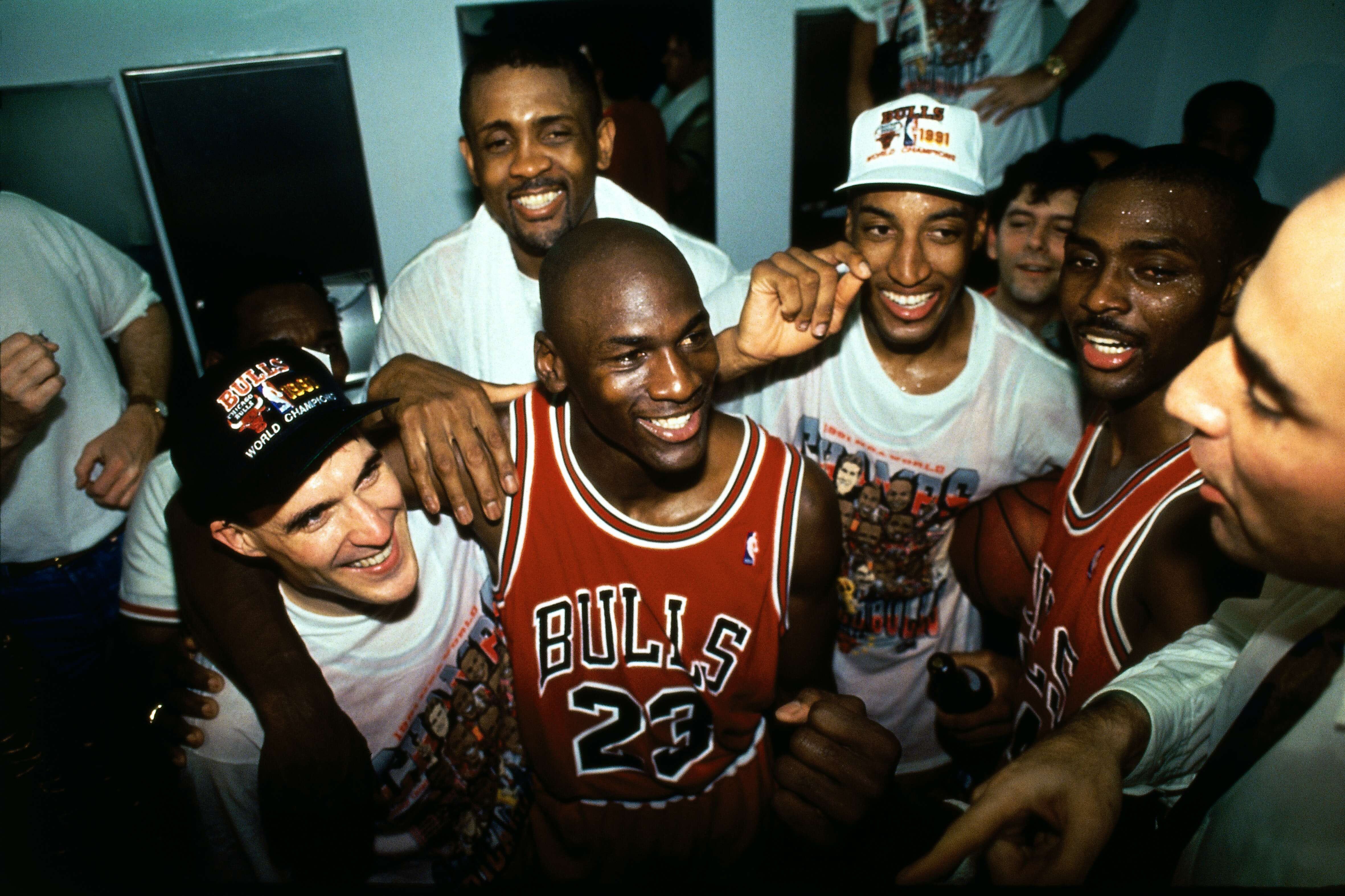
Every Eastern Conference champion of the 1980s had one thing in common: they all had to face Magic Johnson and Lakers in the Finals. Philadelphia. Boston. Detroit. The Lakers were the constant, the measuring stick, the final exam. Now it was Chicago’s turn, and the basketball world had been waiting for this specific matchup, Michael Jordan versus Magic Johnson, since the moment Michael entered the league. NBC had been waiting too. This was their first NBA Finals broadcast, the beginning of a relationship that would define how a generation watched the game. Magic reminded everyone in Game 1, winning on the road in Chicago with the quiet confidence of a five-time champion. Then Phil Jackson put Pippen on Magic. Chicago evened the series at home and then won three straight at the Forum. And the image of Michael Jordan clutching the trophy, weeping, six years of playoff heartbreak finally released, that wasn’t just the end of a series. It was the closing of one decade and the opening of another. A torch carried by giants from Philadelphia to Boston to Detroit to Los Angeles had found its next and brightest flame. And the NBA would never look quite the same again.
Why This, Why Now
I’ve spent my career telling basketball stories, as a coach, as a filmmaker, as a producer who helped build some of the biggest athlete-driven content platforms in sports media. I’ve sat in editing rooms with footage of the players who lived through these moments. I’ve studied coaching, roster construction, the tactical chess matches that most highlight reels skip over entirely. I grew up as a fan, a kid whose understanding of what basketball could be was shaped in large part by the spring of 1991.
Ode to ‘91 is the convergence of all of that. Each installment pairs a video essay, produced with the cinematic ambition these stories deserve, with a written editorial that goes deeper into the history, the strategy, and the personal meaning of what we’re watching. The video gives you the emotion. The writing gives you the context. Together, they tell a story that I don’t think has been told this way before.
The 1991 NBA Playoffs weren’t just a bracket. They were a fulcrum, the exact point where one era tipped into the next. Three dynasties played their final games within weeks of each other. A new one announced itself to the world. And a sport that was about to explode globally, carried by the Dream Team and NBC and a player from North Carolina who refused to stop until he was the best who ever lived, took its first real step into the modern age.
This is the story of an ending and a beginning. And the extraordinary moment when both happened at once.
First installment drops next week. Subscribe to The Everything Basketball so you don’t miss it.
Ode to ‘91 is a production of Everything Basketball and Untouchable Creative New installments every week for six weeks, video essays and companion editorials, beginning with Celtics vs. Pacers: The Last Stand at the Garden.